|
In the dynamic landscape of business, having a robust and reliable Human Capital (HC) support system is crucial for success. Our seasoned and trusted HR Business Partners understand the unique needs of small and mid-sized organizations, offering a full spectrum of capabilities to ensure your team receives optimal support and services to not only survive but thrive. In this blog, we'll explore how our experienced HR experts, with decades of collective experience, can be the key to unlocking your organization's potential. 1. Comprehensive HC Expertise:Our team of HC experts boasts extensive experience in virtually every facet of HC / HR. From talent acquisition to employee and organizational development to compliance and training, we have the knowledge and skills to address the diverse needs of your organization. Small and mid-sized businesses can benefit from our comprehensive approach, receiving guidance and support across the entire HR spectrum. 2. Tailored Solutions for Your Organization:Understanding that each business is unique, we start our journey with you by providing a thorough assessment of your current organization. This allows us to gain insights into your specific challenges and opportunities. Based on our assessment, we present tailored recommendations for how you can proceed, ensuring that the HC solutions we provide are precisely aligned with your organization's goals and objectives. We also recognize organizations change over their life cycle. Lauber’s HC service offering is comprehensive and various elements of it can be brought to bear when and where it is needed as your company evolves. 3. Decades of Collective Experience:With decades of collective experience, our team has worked with a diverse range of businesses and organizations, spanning from small privately held firms to Fortune 500 companies and nonprofit organizations. We recognize that human capital is the most valuable asset for any organization, and our wealth of experience positions us to provide insights and solutions that cater to the unique needs of your business. 4. Access to a Team of Experts:When you choose our HC services, you don't just get a single person; you gain access to our entire team of experts. This collaborative approach ensures that your organization benefits from a wealth of knowledge and diverse perspectives. Whether you need rapid solutions to immediate challenges or are seeking long-term strategies, our team is equipped to deliver the support and expertise your business requires. 5. Preparing Your Organization for Future Success:We are not just focused on solving immediate issues; we are dedicated to ensuring the long-term success of your organization. By providing proactive HC solutions, including training and development programs, talent management strategies, and forward-thinking policies policies and strategies, we aim to empower your team to navigate challenges and seize opportunities in an ever-evolving business landscape.
Human capital is the backbone of every successful organization. With our experienced and trusted HR Business Partners, your business gains more than just support – it gains a strategic ally committed to your success. From comprehensive expertise to tailored solutions and access to a team of seasoned professionals, our HR services are designed to elevate your organization to new heights. We look forward to the opportunity to support you and your team on the journey to sustained success.
0 Comments
In the dynamic realm of business, the success of any organization is tied to the talent it possesses and develops. The process of talent search and recruitment is not merely a task; it's a strategic voyage toward building a team that propels the company forward. In this blog, we'll explore the intricate waters of talent acquisition, exploring key strategies and insights to help you find and retain the best minds for your organization.  Understand Your NeedsBefore embarking on any recruitment journey, it's crucial to have a clear understanding of your organization's needs. Define the roles, skills, experience, and cultural fit required to achieve organizational success. This clarity will serve as your compass, guiding you in the right direction. Craft Compelling Job Descriptions and Company ProfilesYour job descriptions and company profile may be the first impression potential candidates have of your company. Make them compelling and accurate, highlighting not just the responsibilities but also the opportunities for growth and development within your organization. Be transparent about expectations to attract candidates who align with your vision. Leverage TechnologyIn the digital age, technology is your best mate in the recruitment process. Applicant Tracking Systems (ATS), data analytics, and online platforms can streamline your search, making it more efficient and effective. Embrace these tools to manage applications, analyze data, and ensure a smoother hiring process. Build a Strong Employer BrandTop talent is attracted to strong employer brands. Showcase your company culture, values, and employee success stories. A positive employer brand not only attracts high-caliber candidates but also contributes to employee retention. Seek to Build a Complementary TeamHiring a team of people that are carbon copies of one another will limit the capacity of your organization. A diverse team brings a multitude of perspectives and ideas, fostering innovation. Ensure your recruitment strategy is inclusive and actively seeks diversity. This contributes to a more robust and creative work environment. Streamline the Interview ProcessA prolonged and convoluted interview process can deter or exhaust top talent. Streamline your process, ensuring that it is thorough yet efficient. Provide timely feedback to candidates, showing respect for their time and interest in your organization. This is more important than ever as the job market is and will remain extremely competitive due to changing demographics. Investing in Continuous Learning and DevelopmentThe best talents are often those who are committed to continuous learning. Highlight your organization's commitment to employee development and growth opportunities. This not only attracts top talent but also fosters a culture of innovation within your workforce. Leverage Others’ ExpertiseMany small to mid-sized organizations have limited resources. Often their HR departments are overwhelmed with day-to-day responsibilities and may not employ personnel that are true recruiting experts. This limitation can significantly hamper their ability to find the best talent, especially for paramount positions and executive searches.
With unemployment being at decades-long lows and a shortage of talent, it is not enough to place advertisements and hope people apply. Your recruiting approach needs to be more proactive: to get the best you will likely need to go out and actively recruit targeted individuals. Talent search and recruitment are more than tasks; they are strategic investments in the future of your organization. In the long-run exceptional talent is what delivers results. Your organization’s success and long-term stability depends on a strong team. When it’s time to fill a key leadership role or secure other talent in your organization, Lauber Business Partners can help you find the best talent. Lauber has years of experience as a boutique placement firm with multiple delivery models, and we understand what it takes to secure the right people to advance your organization’s success and contribute positively to your mission and culture.  Artificial intelligence (AI) is currently one of the hottest buzzwords in tech and with good reason. The last few years have seen several innovations and advancements that have previously been solely in the realm of science fiction slowly transform into reality. Rapid progress in AI is arousing fear as well as excitement. How worried should you be?
Dr. Jeremy Kedziora is an award-winning researcher with 17 years of experience in machine learning, Bayesian inference, and game theory. He previously served as director of data science and analytics at Northwestern Mutual, leading machine learning efforts in cybersecurity. At fintech startup Giant Oak, he focused on natural language processing in product development. With a Ph.D. in political science and a B.S. in Chemistry, he also spent 9 years at the CIA, leading R&D in data science and modeling. Dr. Kedziora is now MSOE's first PieperPower Endowed Chair in Artificial Intelligence, helping students develop and advance AI responsibly. Join Lauber Business Partners at the University Club of Milwaukee as we host a discussion with Dr. Kedziora on Tuesday, September 26, 2023, from 4:30 to 6:30 p.m. RSVP by emailing Chris De Villers ([email protected]) using the button below.  Recruitment costs are sky-high. Employers are turning to overseas talent. Employees are being more selective in the roles they take. How can you avoid the harmful situations facing HR departments as much as possible? It starts with eliminating regrettable turnover. Turnover or attrition, or the gradual diminishment of a workforce's size, is a common aspect of any business. Regrettable attrition, however, is when employees who you’d have liked to stay in your organization leave and can be quite alarming. Crucially, regrettable attrition has a negative impact on your team. This is in direct contrast to non-regrettable attrition when it’s a net-positive that an employee left, whether that’s due to their performance or the liability they posed to your business. The impact of regrettable attrition is difficult to assess until it happens, at which point it can already have had a significant, negative impact on your business. Therefore, it’s essential businesses are aware of what causes regrettable attrition, the role culture plays in preventing regrettable attrition, and how to begin addressing it. In this article, we’ll explore each of those pieces of the regrettable-attrition puzzle. Let’s get started. A Smart Team Compared to a Healthy TeamWe often see regrettable attrition in highly intelligent teams. Despite these teams’ abundance of technical skill, they often overlook the importance of a healthy culture. These teams prioritize the ‘smart’ side of their business, but neglect factors that will make their organization ‘healthy,’ such as fostering a stronger work-life balance and building a healthy supportive environment. The result is that valuable team members leave in search of a healthier team and more positive atmosphere. Some of the consequences of that regrettable attrition include:
Organizations need to keep in mind that skills aren’t the only things that matter at work. They should prioritize a healthy team culture in addition to measurable skills. By doing so, organizations can retain talent, enhance team performance, and ultimately achieve greater success. Culture is Essential for Preventing Regrettable AttritionBefore you write ‘culture’ off as another tired corporate buzzword, consider the best team on which you’ve ever worked. What comes to mind right away? It’s probably the people you worked with, and the joy they brought to the role. People and culture—not skills—are what keep employees engaged. While hard skills are necessary for the success of any business, a healthy culture is essential for sustaining that success. Think of the front and back wheels of a bike: your business’ skills—the back wheel—drives you forward, and your front wheel—your culture—keeps you moving in the right direction, avoiding hazards as they arise. So, how does culture impact your organization’s retention efforts?
By focusing on a healthy business culture, organizations can prevent regrettable attrition, increase loyalty, and foster long-term success. The Common Causes of Regrettable AttritionRegrettable attrition often results from poor work-life balance and burnout. Organizations should prioritize initiatives that promote balance, provide stress management resources, and foster a supportive culture for employee well-being. So what drives employees to the point where they feel like they have no choice but to leave? A multitude of factors could be at play, but three that we commonly see include:
Let’s take a deeper look at how these factors become the main drivers of regrettable attrition. Ineffective Communication Can Create ToxicityIneffective communication and a lack of transparency within an organization are massive contributors to regrettable attrition. When communication is needlessly secretive and siloed, it can create an environment of uncertainty and frustration for employees. This lack of clarity creates a breeding ground for misunderstandings, rumors, and ultimately the sense of being disconnected from the organization's decision-making processes. Comparatively, organizations that prioritize transparent communication create an atmosphere of trust and engagement. When a business is open about its goals, strategies, and performance, employees have a clearer understanding of the direction and expectations. Additionally, they can see how their individual contributions align with the organization's objectives, which increases their sense of purpose and motivation. By establishing platforms for dialogue and feedback, employees feel empowered and valued. What’s more, a transparent communication style allows for the efficient exchange of ideas, concerns, and suggestions. Not only can this foster a sense of collaboration and shared ownership, but it can lead to breakthrough ideas that otherwise would have never seen the light of day. If Employees Aren’t Growing, They’re LeavingBusinesses love quotes like ‘if you’re not growing, you’re dying.’ It’s the type of aphorism that you can find hanging from the walls in businesses across the country. While such sayings are a motivator for businesses, they also resonate with talent. If an employee isn’t seeing the opportunity for growth, why would they bother staying around? The truth is that employees who job-hop tend to out-earn their peers who stay loyal to an organization over time. What’s that mean for your organization? That your employees need to be convinced that they are going to grow so much with your organization that it will be more valuable to stay than leave for what could be a significant increase in pay. Investing in training, mentorship, and career development programs is crucial to support employee growth, satisfaction, and retention. By providing opportunities for learning and skill enhancement, organizations empower employees to expand their knowledge, acquire new competencies, and take on more challenging roles. These initiatives not only contribute to personal and professional growth but also demonstrate your organization's commitment to investing in its employees' long-term success. Your Employees Must Be On-Board With Your Organization’s GoalsRegrettable attrition ultimately comes down to relationships, and to understand why employees leave, it’s helpful to consider relationships outside work. Why do friends grow distant? One reason that repeatedly appears is that they want different things from life. The same can be said for businesses and their employees. If your employees aren’t aligned with your organization’s values and goals, it can drive regrettable attrition. To address this, it’s critical that organizations clearly communicate their values and ensure that employees understand and internalize them. This is because when employees feel that their own beliefs align with the goals and values of your organization, they’re more likely to feel a greater sense of connection to their work and less likely to jump ship. Dysfunctional Team Dynamics Lead to DissatisfactionTeams are composed of unique individuals. Humans are complicated. Excellent teams have diversity of thoughts, styles and preferences. This sort of diversity can cause friction within a team. Unless team members understand one another well, communications can be misinterpreted, which can lead to friction within the team, which can lead to division. Individuals have different ways of thinking, communicating and interacting. Many times what one team member thinks is a perfectly acceptable way to communicate may cause another team member to withdraw or maybe become more assertive. If team members can understand each other’s personality, communication preferences and means of thinking, it can go a long way to eliminating miscommunications and team dysfunction. Building this understanding within the team along with clear team expectations, lead to healthy effective teams. Investing in teams to build this type of understanding will lead to extremely effective teams and better organizational performance. Well-regarded management gurus believe high performing teams is one of the most lasting competitive advantages an organization can have. Strategies for Eliminating Regrettable AttritionRegrettable attrition and the factors that cause it aren’t some pesky bug—they can’t be eliminated overnight. There’s no single solution, and finding the answer for your business can take time. That said, the benefits of eliminating regrettable attrition and improving employee retention are huge—even too large to measure in some cases. The truth is that when you lose a valuable member of your team, you’ll never know what could have been. It’s important to prioritize your employees’ well-being and promote a healthy work-life balance, but starting somewhere more concrete will lead to better results. Before you dive into ‘prioritizing your employee’s well-being’ or ‘promoting a healthy work-life balance,’ dig deeper. Start by taking a close look at the factors that enable you to truly improve well-being and a work-life relationship.
By implementing these strategies and emphasizing the importance of communication, growth, aligned values and goals, and enhanced team dynamics you can significantly reduce regrettable attrition’s impact on your business. Lauber Business Partners Can Help You Reduce Regrettable AttritionRegrettable attrition is one of many battles within business. While it may seem like an internal struggle, the truth is that it has everything to do with your competition. Your ability to retain and engage employees not only makes you a more attractive place to work, but it also makes your teams more productive.
That retention and engagement can give your organization a significant competitive advantage over its competition. Unfortunately, many businesses struggle to overcome the challenge of regrettable attrition and aren’t able to experience that advantage. Lauber Business Partners team of consultants can help your organization’s managers overcome the challenges that drive regrettable attrition. To learn more about our manager training and HR consulting on employee engagement, get in touch with our team today!
What is Team Culture?Most definitions of team culture are vague statements that conjure a general sense of positivity. They say things like, ‘team culture refers to the shared values, norms, attitudes, and beliefs that shape the collective identity of individuals within a team.’ That’s not very helpful, is it? Let’s cut the abstractions and jargon and put it simply. Team culture is the way people treat each other at work, what people think and feel about their work, and how they perform their work. Team culture is to a business as a cyclist is to a bike; you can have the best setup tuned to perfection, but without anyone to give it power and direction, it’s not going anywhere. What ISN’T Team Culture?Perks aren’t culture. Perks might determine what employees encounter when they show up to work, but culture influences the way people feel and how they act when they show up to work. Perks often get confused with team culture because for decades, growth-driven businesses failed to devote resources to anything that wasn’t obviously driving results. But then these businesses full of high-performing professionals started noticing that their teams were burning out. When these businesses finally came to the realization that the pressure was actually holding their teams back, their knee-jerk reaction was to make employees more relaxed and comfortable at work. Soon, the world saw a wave of corporate game rooms, slides, and nap-pods flood across their LinkedIn feeds and the pages of business journals. But these perks missed the mark, and the ping-pong tables went unused. Why? Because the perks didn’t actually change the way teams communicated, gave feedback, or collaborated. They didn’t change the culture. Here’s How Building a Team Culture Impacts the Bottom LineTeam culture is largely invisible, but its impact isn’t. Team culture has direct and measurable impacts on organizations. 1. Healthy Team Cultures Make Businesses More ProfitableAccording to a report from McKinsey, organizations with a strong culture are more profitable. The businesses with the best team cultures are delivering 60% more profits to their shareholders than businesses with average team cultures, and 200% more than those with the worst cultures. Additionally, team culture engages employees, and that’s one of the most valuable things a business can do. How valuable? Engaged teams can see a nearly 20% increase in productivity, while teams with disengaged employees can damage productivity by as much as 40%. 2. A Healthy Team Culture Makes Your Business AdaptableChange can be a challenge, but healthy team cultures can adapt and work through it. A team culture built on healthy and efficient communication, shared goals, trust, and genuine buy-in can shift directions faster than a team culture that’s fragmented. When a healthy team culture exists in an organization, employees feel comfortable and empowered to share their thoughts and concerns openly. When a team has that level of trust and confidence in their colleagues, it allows them to share information rapidly, accelerating the rate at which they adapt. 3. Team Culture Helps Your Business Retain TalentLosing key employees hurts your bottom line big time. According to SHRM, the cost of replacing a talented colleague can be three to four times their annual salary. That means that in industries with stiff competition, a healthy team culture can ultimately be the key differentiator that gives your business an advantage. If you want to avoid an uncomfortable conversation about recruitment costs in your next quarterly budget meeting, focus on engaging your teams. When your team culture is engaging and healthy, employees are almost 90% less likely to leave. How to Build a Team CultureBuilding team culture isn’t a one-time thing. In fact, it’s never finished. But that doesn’t mean building a team culture is a Sisyphean task; rather, think of team culture like an organism. You need to take the time to raise it, and you need to care for it throughout its life.
If you’re an HR pro or a People Manager struggling to build or maintain a healthy team culture, know that you’re not alone. As remote work becomes increasingly common and employee expectations continue to change, trying to keep a pulse on the numerous factors that impact team culture and engagement is only getting harder. We’re here to help. Lauber Business Partner’s consulting on employee engagement can help businesses like yours identify roadblocks and develop a strategy for moving past them. If you’re ready to make work better, get in touch with Lauber Business Partners today.  Employee retention is vital, but why should you invest in it? The short answer is: because you can’t afford not to. The longer answer requires a look at attrition—the alternative that faces your business. What’s the True Cost of Attrition?Attrition has hard costs like hiring expenses, which can grow quickly, but there are also other impacts that are harder to measure. So how does attrition truly affect your business? Attrition Impacts Employee MotivationWork friendships are real and they matter, not just to your employees, but to your business’ productivity. If two employees are close and one leaves, it can leave the other feeling less motivated. It could even lead them to start looking for new opportunities, further increasing your attrition rate. Attrition Impacts MoraleWhen employee churn is high at your organization, it sends the wrong message to current and new employees. For new hires, it hints that they’re in a company where their career won’t grow. Why would they want to stick around there? For veteran employees and managers, attrition can lead to a frustration and an increasing workload when they have to pick up extra work and recruit a new employee. Attrition is the Enemy of ProductivityWhen an employee leaves, their responsibilities don’t leave with them. Someone has to pick up that slack, and that can lead to poorer performance for the business. Additionally, attrition means your business is losing institutional knowledge that’s been developed over years. You may be able to replace an employee in three months, but you’re not guaranteed to regain that knowledge with a new hire. Effective teams create productivity by blending different skills and abilities into a single mechanism. In short, effective teams create exponential impact, not additive impact. The risk here is that the removal of even one key component stifles the output of the entire team in a similarly exponential fashion. So what do you need to do to limit attrition and improve employee retention? Building a Smart and Healthy Culture Can Improve Employee RetentionLeaders and managers have a serious need to solve the problems that attrition poses. Easier said than done. There’s also no single solution. Each business faces unique challenges and needs custom solutions. However, those solutions begin at the top with managers and leaders. The decisions, actions, and attitudes of the people in these positions will percolate through the organization, for better or for worse. To reap the benefits of employee retention, get focused on these key areas: 1. Develop Your LeadersIf there was a singular answer to the question “why does attrition happen?” it would be ‘managers.’ According to a study from Gallup, managers are largely responsible for disengaged teams. These are the same teams that are prone to attrition and low productivity. However, saying “managers are failing” doesn’t fix things, and it’s also not totally accurate. The truth is that most managers don’t have the skills and tools they need to cultivate successful teams. Just like new hires need training and opportunities for ongoing development, so do managers. To improve retention in your business, you need to address the reason so many employees leave. That reason is often managers. Invest in coaching and professional development for managers and teams. When that happens, things downstream of your managers, like employee retention, can turn around. 2. Build Effective TeamsThe success of every business depends on the performance of its teams – leadership teams, departmental teams, shop floor teams and project teams, among many. Patrick Lencioni, the author of many management books, including The Five Dysfunctions of a Team, says, "If you get all the people in an organization rowing in the same direction, you could dominate any industry, in any market, against any competition, at any time." Because of the unique make-up of individuals, no teams are identical. It is crucial that team members understand one another and how to work effectively with one another. It is also crucial to understand what team expectations are and what it means to be a great team member. Team members are interdependent and investing in the health of your teams is an investment that pays big dividends. No business can reach its potential without effective teams. 3. Communicate Effectively and Build TrustEffective communication is foundational for the success of any team. You’ve heard it a million times. But what does this actually look like?
These efforts build trust. When trust is established, teams are better off for many reasons. For example:
4. Follow ThroughOngoing development opportunities and open communication are vital for improving employee retention, but they’re not one-time quick fixes. They require maintenance, time, and dedication. When leaders and teams have good communication, things run smoothly, conflict is resolved efficiently, and productivity soars. But you have to keep at it—even when employees inevitably do leave. The Benefits of Employee Retention are Within ReachBusinesses are like cars. Hit the gas all you want, but without someone steering, you’re going to crash. Smart and healthy business cultures understand the need to prioritize both in order to reach their business goals.
By coaching and developing managers, building effective teams, communicating effectively and building trust, and being consistent at this, your business can make significant strides toward retaining employees and building a smart and healthy organization. Your bottom line—and your employees—will thank you. The benefits of employee retention are yours for the taking, but it’s not always easy to find the areas that need attention. If your organization is struggling with employee retention or wants to turn your employee engagement into a strategic strength, get in touch with the team at Lauber Business Partners. Our team can perform an engagement assessment to help your organization make strides toward becoming smart and healthy.  For many small and mid-sized businesses, hiring a full-time Chief Financial Officer (CFO) can be a major expense that simply isn't feasible. Fortunately, there is a solution that allows businesses to access the expertise of a CFO without the high costs associated with a full-time position. That solution is a fractional CFO. A fractional CFO is a financial expert who works part-time for a business, providing strategic financial guidance and support as needed. This can be a cost-effective solution for businesses that need help managing their finances but don't require or cannot afford a full-time CFO. Here are some of the benefits of a fractional CFO:
By providing expert financial guidance and support, a fractional CFO can help businesses make better financial decisions, reduce costs, and increase revenue. This can improve profitability, cash flow, and overall financial health. In conclusion, a fractional CFO can be a valuable asset for small and mid-sized businesses. They provide access to financial expertise, flexibility, cost savings, an objective perspective, improved financial performance, and a partner in strategic decision-making. If you're looking for a cost-effective way to manage your finances and move your business forward, consider hiring a fractional CFO. Engage a seasoned Lauber Fractional CFO with extensive skills, experience, and strategic insight without paying for a full-time resource. With the Fractional model, you can engage a CFO on a flexible part-time basis—a day or two a week, once a month, or as often as needed—at a cost you can afford. You can rest comfortably knowing that a Lauber Fractional CFO is proficient in the most complex Finance and Accounting topics. At Lauber, we don’t treat organizational health as an afterthought. To us, it’s essential. So, alongside the services we provide our clients to help them build and maintain the smart parts of their businesses (like Finance and Accounting and HR services), we offer innovative menu-based leadership and development programs and talent acquisition services, resulting in a healthy and positive team culture that drives results. WHAT DOES IT TAKE TO BE A SMART AND HEALTHY COMPANY?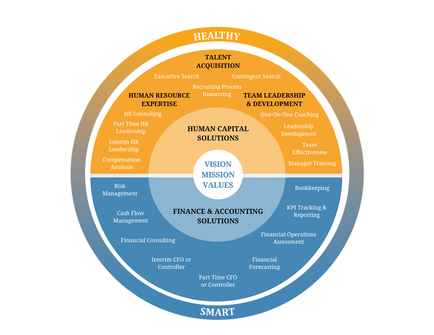  In today's fast-paced and competitive business environment, the success of an organization depends not only on its profitability but also on its ability to create a healthy and sustainable workplace. The concept of a smart and healthy organization is gaining traction as organizations realize the benefits of prioritizing employee well-being and creating an environment that fosters innovation, creativity, and collaboration. This blog will discuss what it means to be a smart and healthy organization, and the steps organizations can take to become one. What is a Smart and Healthy Organization?A smart organization is one that has expertise in traditional areas like strategy, finance and accounting, operations, engineering/design, marketing, sales, and human resources. A smart and healthy organization also prioritizes employee well-being and creates an environment that promotes physical, emotional, and intellectual health. A smart and healthy organization is one that invests in its employees by providing them with the necessary resources and support to thrive both personally and professionally. Such an organization recognizes the importance of maintaining a healthy work-life balance and encourages its employees to care for themselves. Characteristics of a Healthy OrganizationA smart and healthy organization exhibits the following characteristics:
The Benefits of a Smart and Healthy OrganizationOrganizations prioritizing employee well-being and creating a healthy workplace enjoy several benefits. These include:
Stay Smart and Get Healthy with Lauber Business PartnersIn conclusion, creating a smart and healthy organization requires a commitment to employee well-being, a positive work culture, innovation, and creativity, learning and development, and sustainability. By prioritizing these areas, organizations can create a workplace that promotes employee well-being, fosters innovation, and enhances the organization's reputation, leading to increased productivity and engagement, lower turnover rates, and improved employee health.
At Lauber, we don’t treat organizational health as an afterthought. To us, it’s essential. So, alongside the services we provide our clients to help them build and maintain the smart parts of their businesses we also offer an innovative menu-based leadership and development program, elegantly layered organizational health curriculum with integrated coaching, to create a healthy and positive team culture that drives results. What does it take for an organization to be smart and healthy? And why is it more important than ever to create workplaces where employees know that their leaders not only recognize and appreciate their unique talents, but also genuinely care about their well-being? Patrick Lencioni, the author of the best-selling business book The Advantage, makes a convincing case that the most successful organizations don’t just master strategy, marketing, and finance and accounting, the traditional “smart” facets of business operation; they also consciously build positive, healthy cultures in their organizations. When leaders take clear steps to reduce office politics and confusion, and help their employees find what brings them joy and energy at work—creating the conditions of trust and vulnerability that promote organizational health—the payoffs are profound, Lencioni explains. From a practical standpoint, businesses that prioritize health have a strong strategic advantage, because their employees are more productive and engaged. Their employees are also less likely to leave the organization, taking critical knowledge with them—another huge gain in this age of the great reshuffling, when a record number of Americans are quitting their jobs to find work that’s more fulfilling. Organizational health also creates positive ripple effects that improve employees’ relationships with clients and customers, and even their own families and communities. When people go to work with “clarity, hope, and anticipation,” and come home with “a greater sense of accomplishment, contribution, and self-esteem,” the impact, per Lencioni, “is as important as it is impossible to measure.” At Lauber, we don’t treat organizational health as an afterthought. To us, it’s essential. So, alongside the services we provide our clients to help them build and maintain the smart parts of their businesses—including support for finance and accounting, human resources, and strategy—we also offer an innovative menu-based program, rooted in Lencioni’s elegantly layered organizational health curriculum with integrated coaching, to create a healthy and positive team culture that drives results. 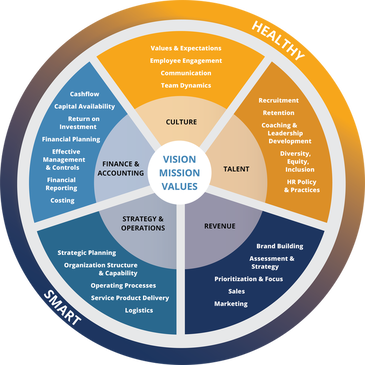 THE LAUBER MODEL FOR ORGANIZATIONAL HEALTHAs we emerge from the pandemic, we’re hearing from leaders who are eager to make health the prevailing cultural value in their organizations going forward. Some want focused support to reboot and refresh by helping their employees reconnect with each other, plus the parts of their work where they excel. Some want to break down silos that have long contributed to inefficient decision-making, and distrust, in their companies. And others, doing team development for the first time, want to do a deep dive, instilling healthy practices into every aspect of their operations. If you would like to make your organization healthier, here are some of the ways we can help: 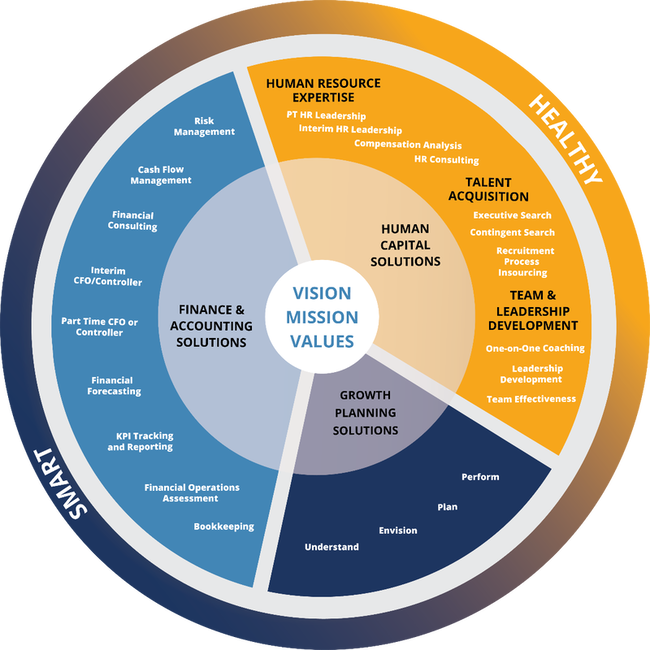 Specific to the healthy initiatives, we’ll work with you to design a coaching program and bring it to life. It could include a Team Culture Assessment to identify your organization’s collective strengths and challenges, or a Working Genius Assessment to help individuals and teams find their natural gifts for certain tasks, or both. And if a deep dive is in order, we can also work with you and individuals across your organization—with a combination of one-on-one coaching and facilitated team sessions—to build trust, master the art of healthy conflict, achieve commitment, and embrace accountability. Contact Lauber Business Partners TodayWe’re proud that our healthy culture coaching consistently improves interpersonal dynamics, enhances team performance, and fosters individual growth—delivering triple-impact results that help businesses thrive.
To learn more, contact us at [email protected].  What does it take for an organization to be smart and healthy? And why is it more important than ever to create workplaces where employees know that their leaders not only recognize and appreciate their unique talents, but also genuinely care about their well-being? Those of you who were able to join us last week for “The Power of Organizational Health and Clarity,” a livestreamed talk by management consultant Patrick Lencioni, will already have some answers to these timely questions. Lencioni, author of the best-selling business book The Advantage, made a convincing case that the most successful organizations don’t just master strategy, marketing, and finance and accounting, the traditional “smart” facets of business operation; they also consciously build positive, healthy cultures in their organizations. Organizational HealthWhen leaders take clear steps to reduce office politics and confusion, and help their employees find what brings them joy and energy at work—creating the conditions of trust and vulnerability that promote organizational health—the payoffs are profound, Lencioni explained. From a practical standpoint, businesses that prioritize health have a strong strategic advantage, because their employees are more productive and engaged. Their employees are also less likely to leave the organization, taking critical knowledge with them—another huge gain in this age of the great reshuffling, when a record number of Americans are quitting their jobs to find work that’s more fulfilling. But going beyond the office, organizational health also creates positive ripple effects that improve employees’ relationships with clients and customers, and even their own families and communities. When people go to work with “clarity, hope, and anticipation,” and come home with “a greater sense of accomplishment, contribution, and self-esteem,” the impact, per Lencioni, “is as important as it is impossible to measure.” Improving and Maintaining Organizational HealthAt Lauber, we don’t treat organizational health as an afterthought. To us, it’s essential. So, alongside the services we provide our clients to help them build and maintain the smart parts of their businesses—including support for finance and accounting, human resources, and strategy—we also offer an innovative menu-based program, rooted in Lencioni’s elegantly layered organizational health curriculum with integrated coaching, to create a healthy and positive team culture that drives results. As we emerge from the pandemic, we’re hearing from leaders who are eager to make health the prevailing cultural value in their organizations going forward. Some want focused support to reboot and refresh by helping their employees reconnect with each other, plus the parts of their work where they excel. Some want to break down silos that have long contributed to inefficient decision-making, and distrust, in their companies. And others, doing team development for the first time, want to do a deep dive, instilling healthy practices into every aspect of their operations. CONTACT Lauber’s Organizational Health-Focused CoachingIf you would like to make your organization healthier, we can help you, too. We’ll work with you to design a coaching program and bring it to life. It could include a Team Culture Assessment to identify your organization’s collective strengths and challenges, or a Working Genius Assessment to help individuals and teams find their natural gifts for certain tasks, or both. And if a deep dive is in order, we can also work with you and individuals across your organization—with a combination of one-on-one coaching and facilitated team sessions—to build trust, master the art of healthy conflict, achieve commitment, and embrace accountability.
We’re proud that our healthy culture coaching consistently improves interpersonal dynamics, enhances team performance, and fosters individual growth—delivering triple-impact results that help businesses thrive. To learn more, please feel free to contact us. We'd be happy to discuss your organization’s needs and help you design your own roadmap to results. Please contact us by email at [email protected] or by phone at 414-273-8060. |


 RSS Feed
|

|
Website by RyTech, LLC